
Excess 13
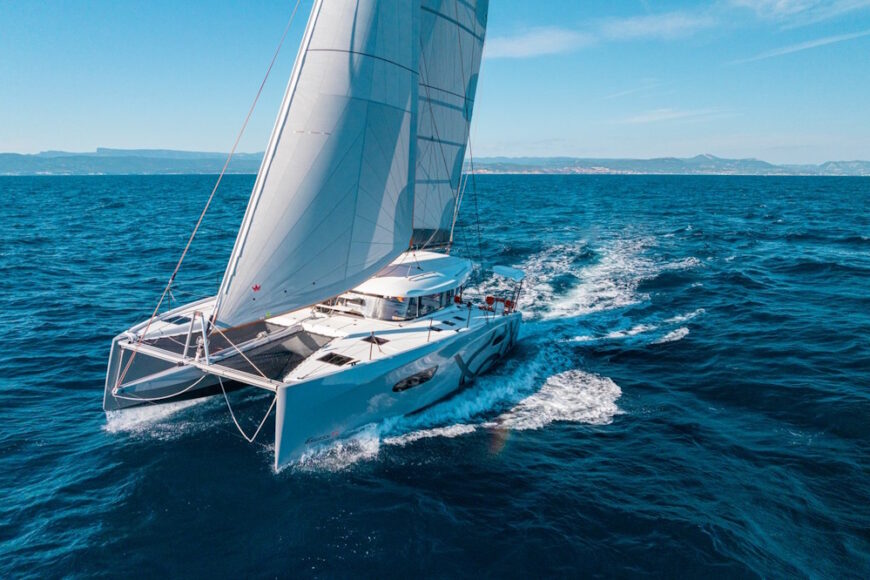

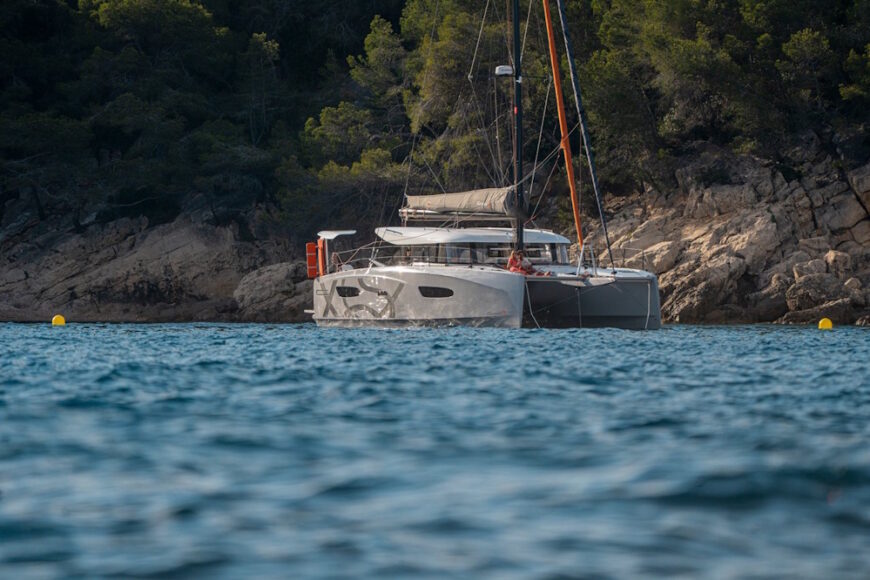
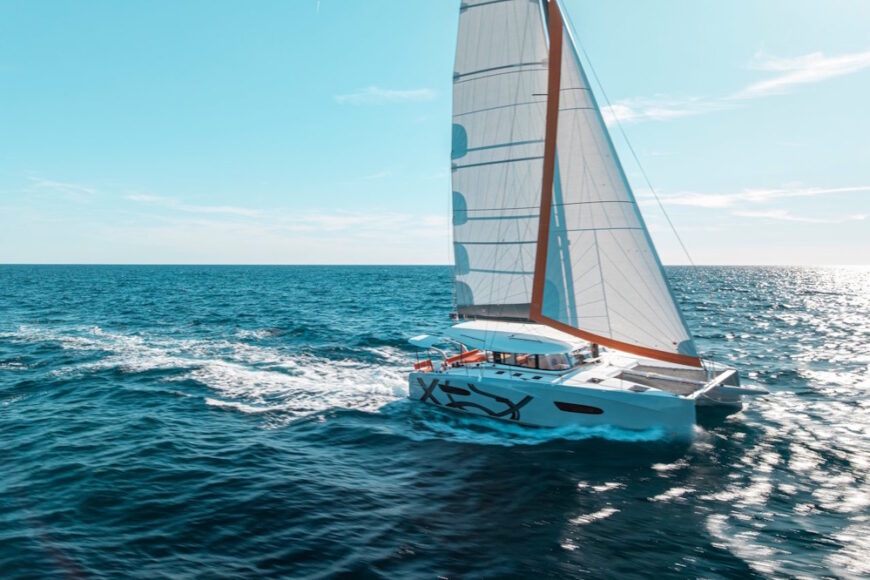

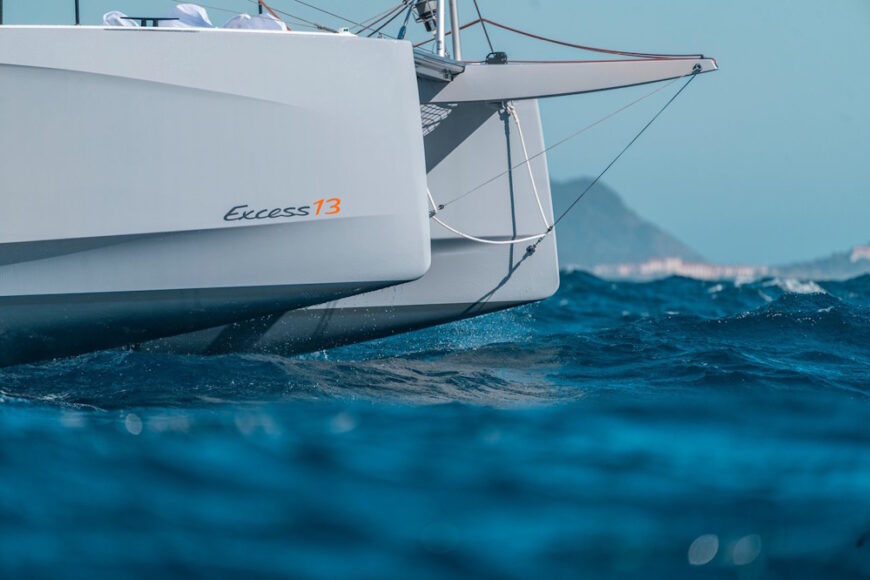
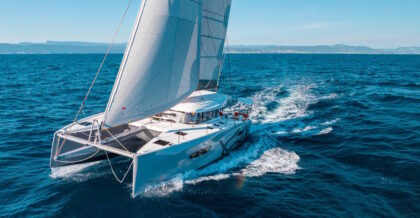


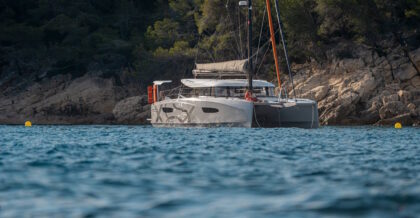

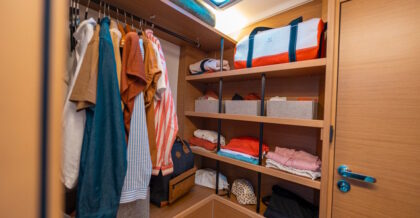
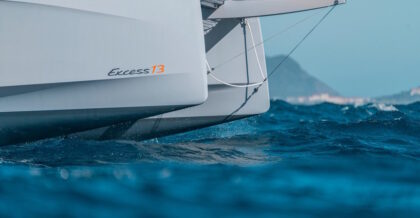
There was something refreshing about stepping aboard a new Excess 13 in Port Ginesta, our home port in Spain. She’s the third “pure” design from the Excess team – after the 11 and the 14 – and she feels like the yacht where the brand’s DNA has truly found its feet.
Where her larger and smaller sisters moved the dial on the performance and comfort balance, the 13 has moved up a gear. This is a catamaran that gives you great helm feel like a monohull without losing the space and comfort benefits of a multihull.
After a few hours of sailing off the Catalan coast, one thing was clear: this is a yacht designed for sailing.

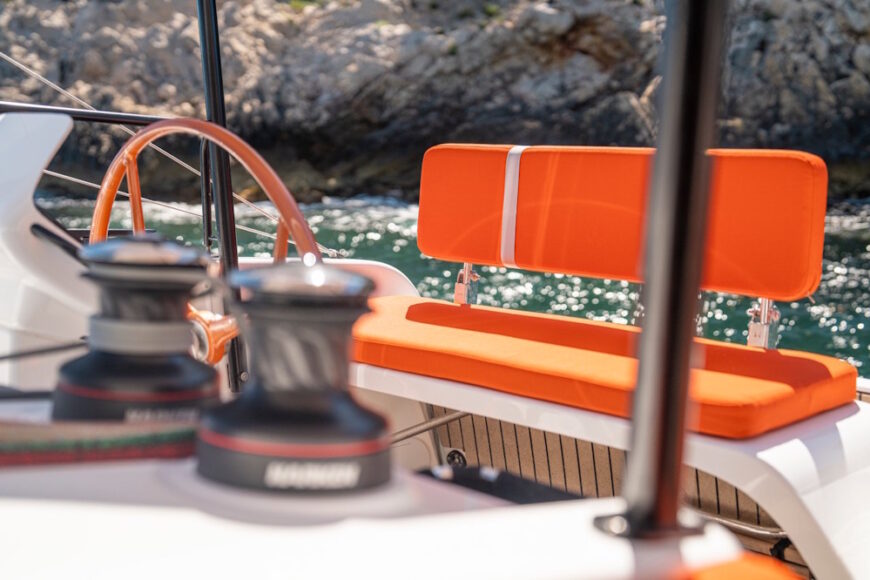
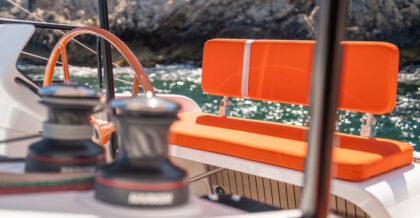
Underway, the Excess 13 feels alive. The twin aft helms put you close to the water and in direct connection to the rudders. The steering feedback is direct and tactile, with none of the detached, hydraulic numbness you find on heavier cruising cats. From the first tack, you feel connected.
Upwind, the overlapping genoa drives her smartly along, while the balance remains easy and predictable. But it’s when you unfurl the Code 0 from the integrated bowsprit that she really starts to get into her stride. On our test sail, in just over 12 knots of breeze, the Excess 13 powered up to a lively 9.5 knots with effortless acceleration and a satisfying hum through the rig.
Credit goes to the design partnership between VPLP and Nauta Design, who have optimised the hull shapes, weight distribution, and sail plan for a responsive, sporty feel. The inclusion of carbon struts to reduce weight in the living spaces and a careful balance of structure and stiffness mean she’s fast and agile.
The overall impression? A catamaran that wants to be sailed.

Up Top
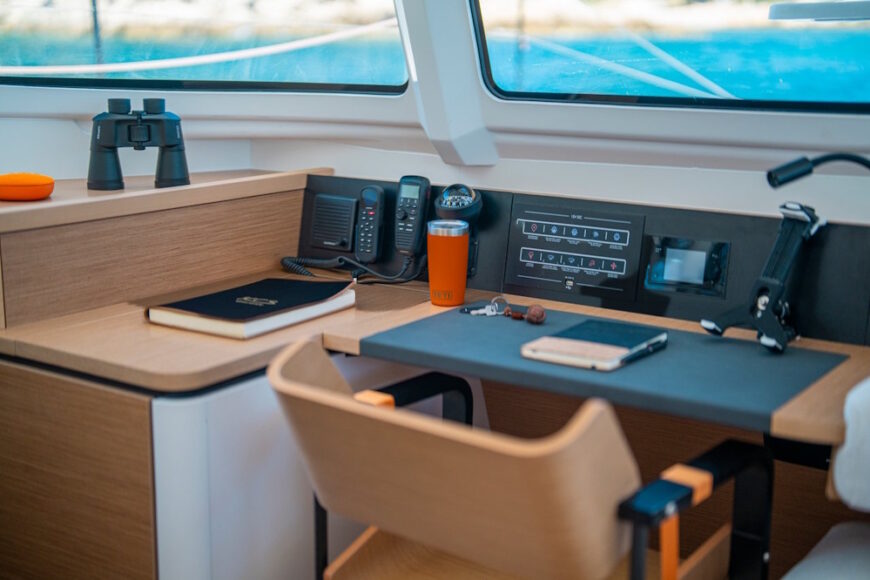
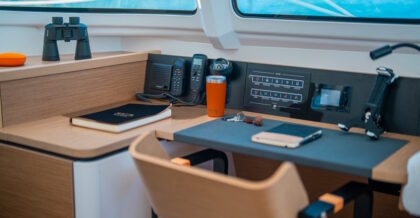
The deck layout reflects Excess’s design philosophy: “more intense sailing without losing the comfort.” The twin aft helms are directly connected to the rudders and provide good visibility of the sails. They have worked hard to optimise the sightlines through the saloon if you are looking through to the opposite bow. You might need to switch sides or hop up to the side deck if you are manoeuvring in the marina.
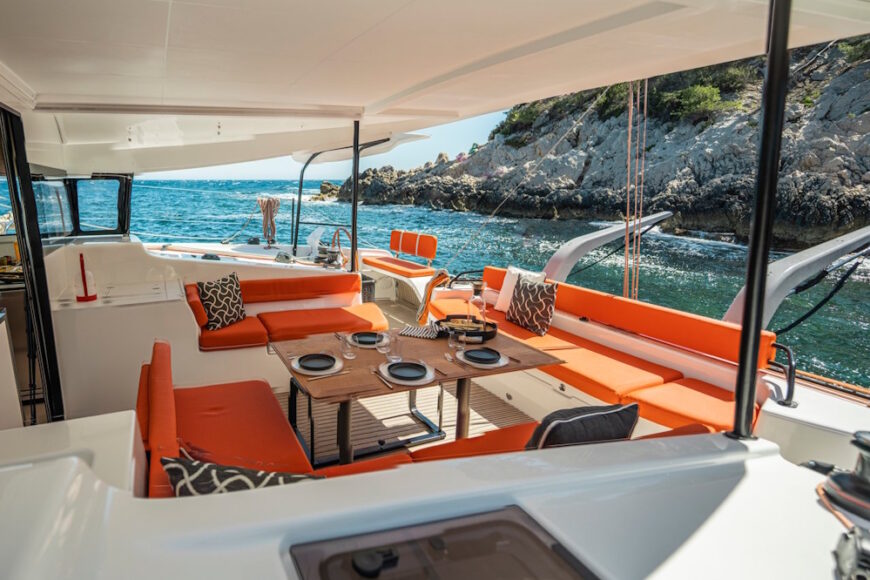
The aft cockpit is classic Excess: open, airy, and with swing panels in the coachroof sides for adjustable ventilation, a small but clever upgrade developed from owner feedback. Sightlines forward remain excellent, and the social space flows naturally between helm, dining area, and galley.
Under sail, everything is to hand. Winches are well positioned, sheets are led cleanly, and the boat can be handled by two easily, or even solo. The balance between comfort and functionality is spot-on.
The transoms swing down (a design inspired by the latest monohulls) giving good access to the ocean when down and safety for the crew when up.
Down Below
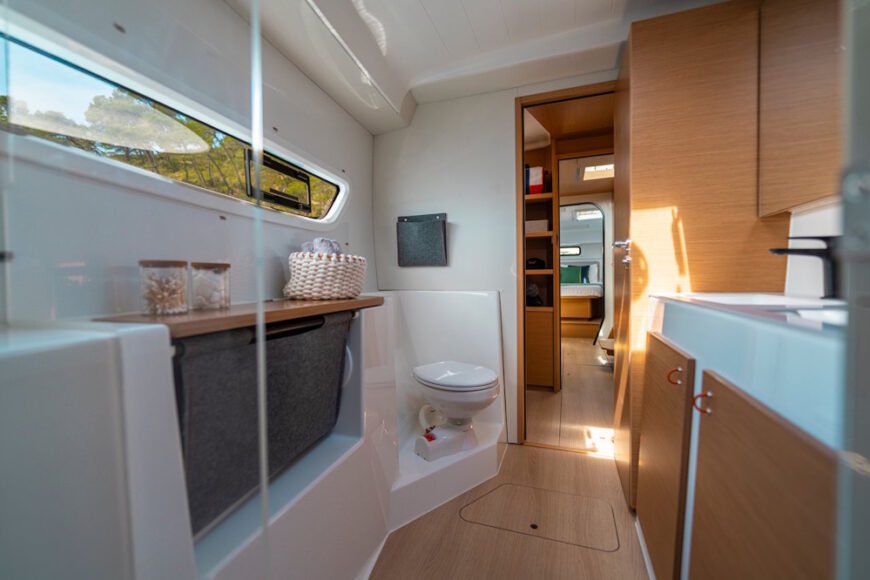
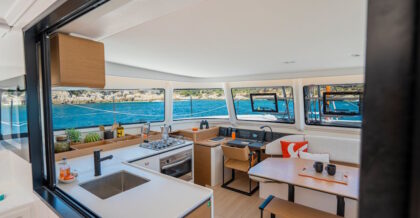
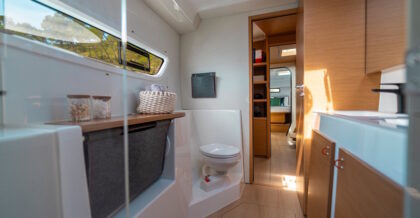
Step down and the surprises continue. The double-use doors – which cleverly serve as both cabin doors and cupboard closures – show how much thought has gone into optimising the space and reducing the weight. The fit and finish is light and modern, continuing Excess’s signature blend of style with practical durability.
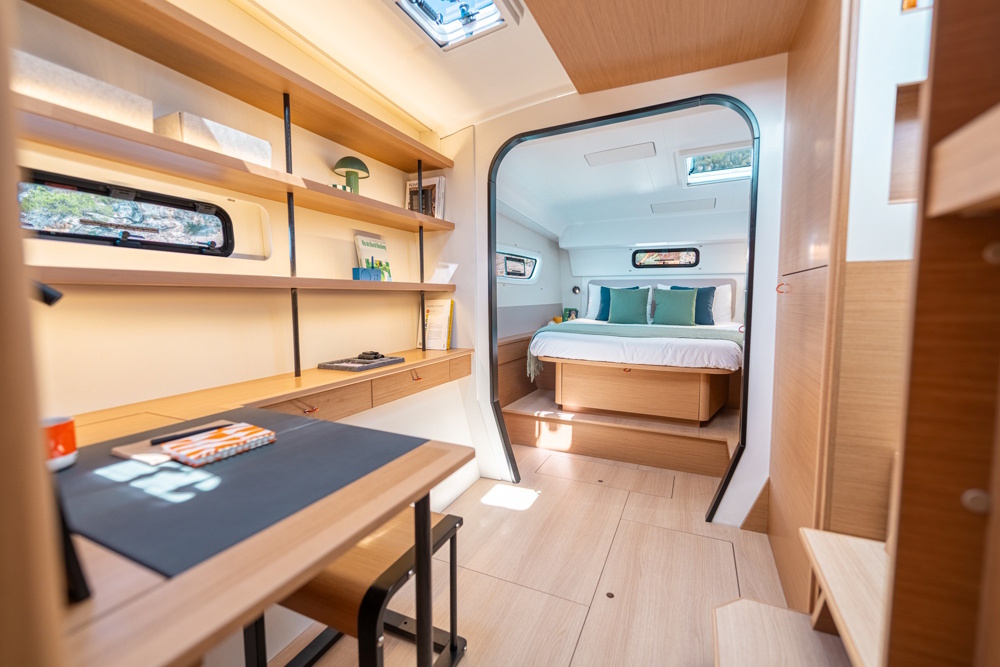
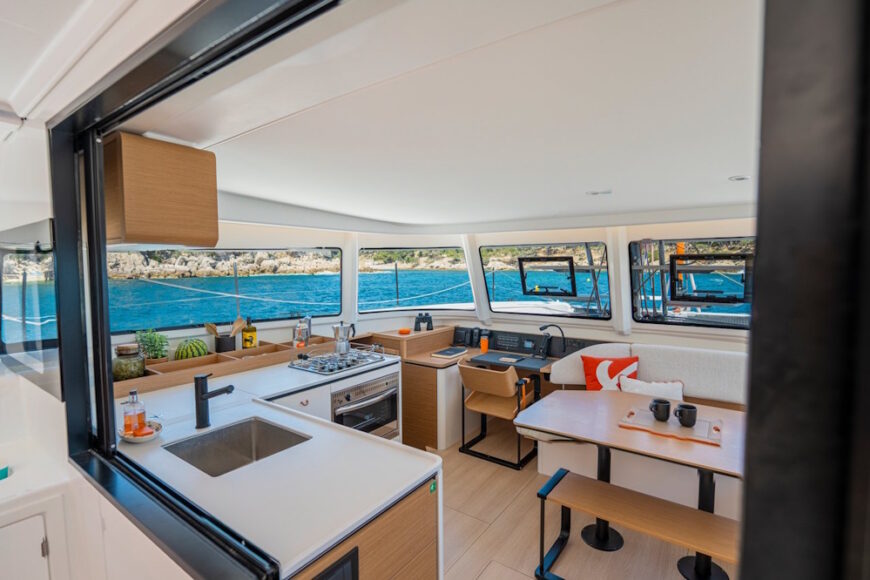
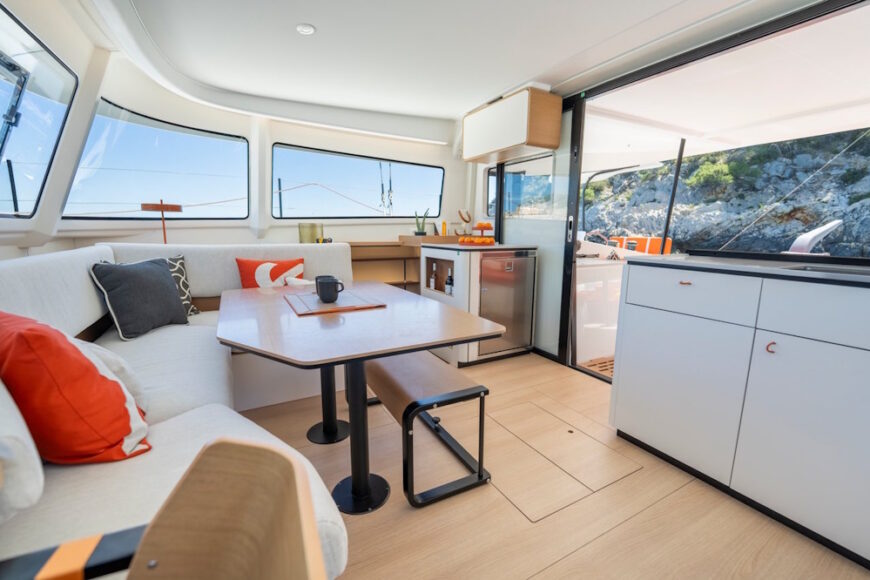
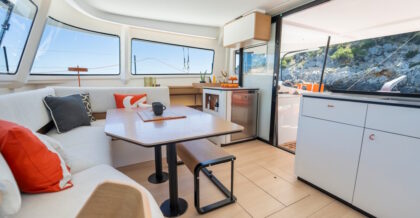
Visibility through the hull windows is good, and there’s an sense of connection to the outside world. The saloon and galley spaces benefit from excellent cross-ventilation and a simple, modular design that feels open without wasting space.
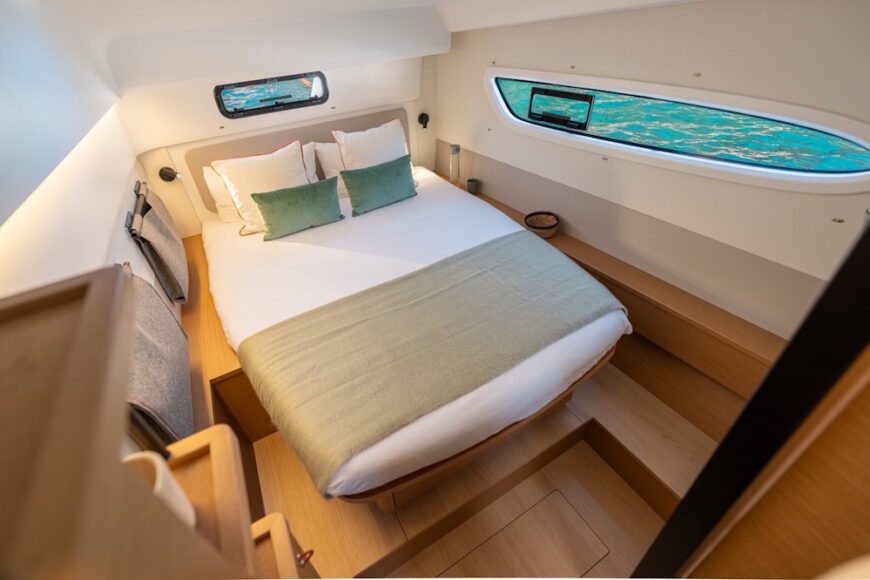
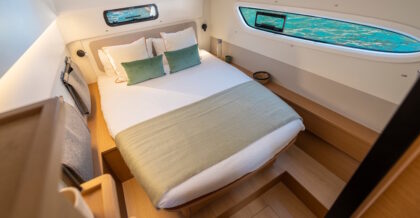
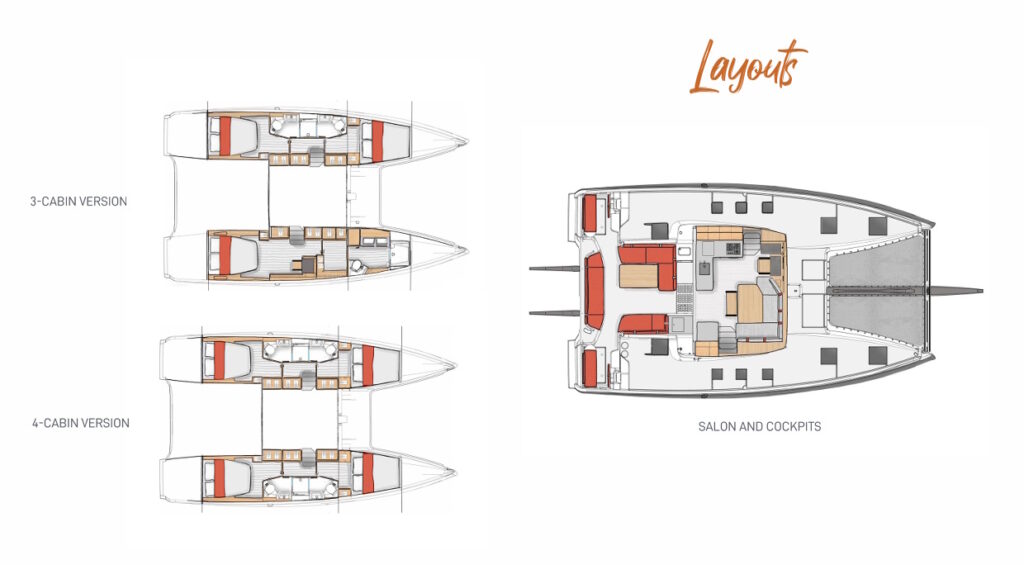
Cabin layouts can be owner-focused or charter-friendly, but both feel livable with warm wood tones, smart lighting, and good storage that will make it a pleasant space for extended cruising.

 Excellent helm feedback – a genuine sailing catamaran
Fast and responsive, especially under Code 0
Clever design touches like swing-down transoms and ventilation panels
Comfortable and social cockpit layout
Easily handled by two people or even solo
Lighter construction thanks to carbon struts and weight optimisation
Excellent helm feedback – a genuine sailing catamaran
Fast and responsive, especially under Code 0
Clever design touches like swing-down transoms and ventilation panels
Comfortable and social cockpit layout
Easily handled by two people or even solo
Lighter construction thanks to carbon struts and weight optimisation
 Interior volume slightly less than other cruising cats of similar LOA
Helm positions expose you more to the elements. They have improved the design of the helm biminis
Interior volume slightly less than other cruising cats of similar LOA
Helm positions expose you more to the elements. They have improved the design of the helm biminis
- A powerful SA/D ratio compared to the competition, especially if you go for the more powerful Pulse Line.
- Integrated bowsprit with Code 0: power and elegance combined
- Swing-down transoms: safety under way, more real estate at anchor
- Ventilation swing panels in aft cockpit: smart airflow solution for warm climates
- Carbon strut reinforcements: weight savings and improved performance
- Double-use cabin doors: space-saving and clever detailing

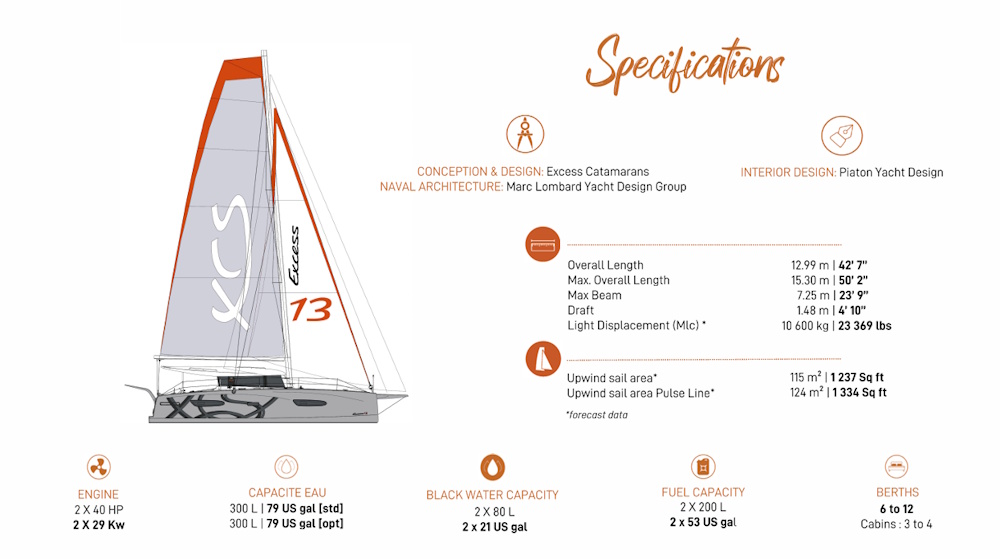
| Length Overall | 12,99 to 15,30 m / 42’7” to 50’2” |
|---|---|
| Beam Overall | 7,25 m / 23’9” |
| Draft | 1,48 m / 4’10” |
| Disp. (Light) | 10,6 T / 23,480 lbs |
| Mainsail | 71 m² / 764 sq ft |
| Code 0 option | 76 m² / 818 sq ft |
| Power | 2 x 40 Hp / 2 x 29 Kw |
| Water | 300 L / 79 US Gal |
| Fuel | 2 x 200L / 2 x 53 US Gal |
| Upwind Sail Area | 124 m² / 1,334 sq ft (Pulse Line) |
| Genoa | 42 m² / 452 sq ft |
Summary
This is the best Excess yet: she’s lively and comfortable. The brand continues to evolve and improve. This feels along way from the initial launch of Excess Catamarans with the 12 and 15 in 2019.
Contact Katamarans
Please contact us if you have any questions about the content on the site.
You can sign up to our newsletter HERE
"*" indicates required fields