Balance Catamarans: a New Chapter
Balance Catamarans are steering into a new chapter: keeping the brand’s trademark “fast, light, offshore-capable” philosophy, but now offering a modern energy package as an option, not a compromise.
The big news at the brand is VersaDrive, their diesel-electric hybrid powe unit built around Integrel’s E-Drive, now offered as an option in the newest models like the 464 and the 502, and set to be part of the broader range as the 540 replaces the iconic 526.
A Brief History
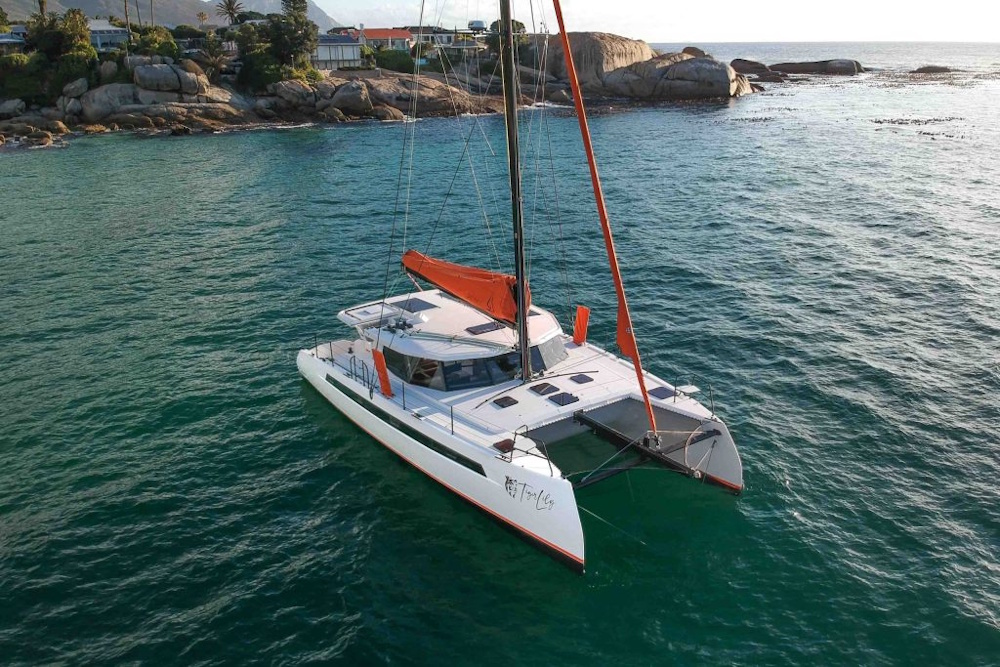
Balance was born in 2013, rooted in a simple frustration: why do so many performance cats feel stripped-out, while many cruising cats feel overweight and under-sailed? Founder Philip Berman partnered with South Africa’s Nexus Yachts, and designer Anton du Toit to shape the range into what Balance pitches as high-performance bluewater boats with liveaboard comfort.
The first big success, the Balance 526, became a reference point for the brand: light enough sail close to windspeed in calmer conditions, strong enough to be taken offshore, and finished to a standard that made owners talk about “quality” as much as speed.
Where they’re built
Balance’s production is part of the appeal: these are built in South Africa, leveraging a deep composite boatbuilding ecosystem and Balance’s long-running relationship with Nexus.
What makes these boats so “Balanced”?
1) VersaHelm
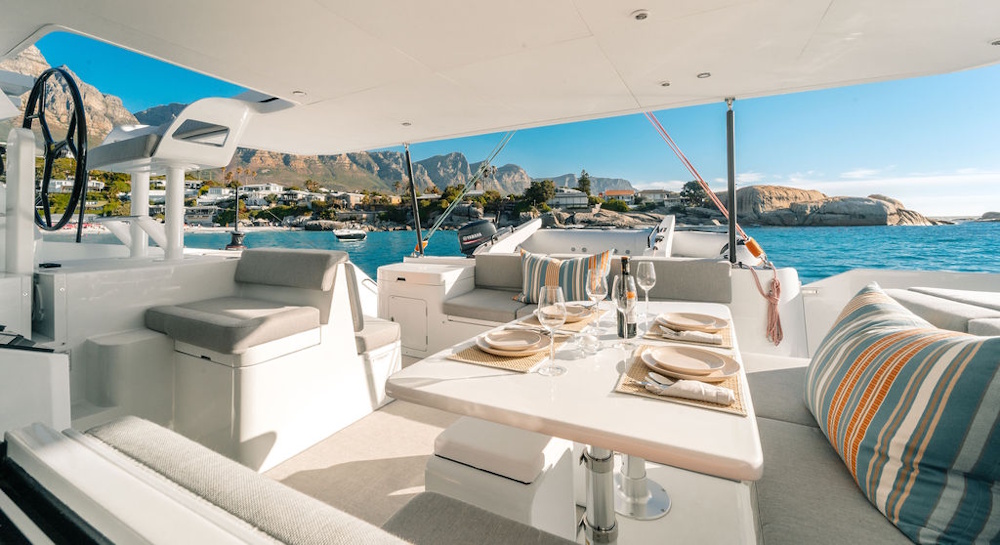
Balance’s VersaHelm is the brand’s most famous design pillar: a 90-degree pivoting helm that lets you steer up high in the breeze and sunshine or drop down into shelter when conditions turn nasty, while keeping excellent visibility and control. It sounds simple until you do a cold, wet night watch and realise how much it changes fatigue and safety.
They have spent many design hours working on customer feedback to optimise the sightlines and ergonomics acorss the multiple poisitions. When you see other manufacturers copying the set-up, you know there must be somethng in it. Balance didn’t invent the swing-helm, that’s been around for quite a while in the sailing industry, but they have been busy perfecting it.
2) VersaDrive: hybrid, engineered as an option from day one
This is the “new direction”. The 464, 502 and 540 are offered with a VersaDrive configuration using Integrel E-Drive, combining diesel propulsion with electric drive and high-output charging. Balance positions it as less fuel burn (they quote up to 25% reduction in the VersaDrive model), faster battery charging, and the ability to carry a big solar array (up to 3,000W).
This systems provides up to 30kW charging output from twin 45hp Yanmars and around 40HP of electric drive from the battery bank. It’s an eco power system designed to efficeintly supply your service loads and provide quiet electric manoeuvring with hops to get you through windless periods.
3) Robust systems and offshore capability
One of Balance’s key drivers is to build boats that are reliable over long passages as welll as having wow-factor at the dock. That shows up in engineering priorities like weight distribution, carbon reinforcement strategy, and systems access. The stiffness, balanced sail plan and underwing clearance shows how much they care how the boat behaves at sea.
4) Interiors: custom, beautiful, practical, and built to be lived in
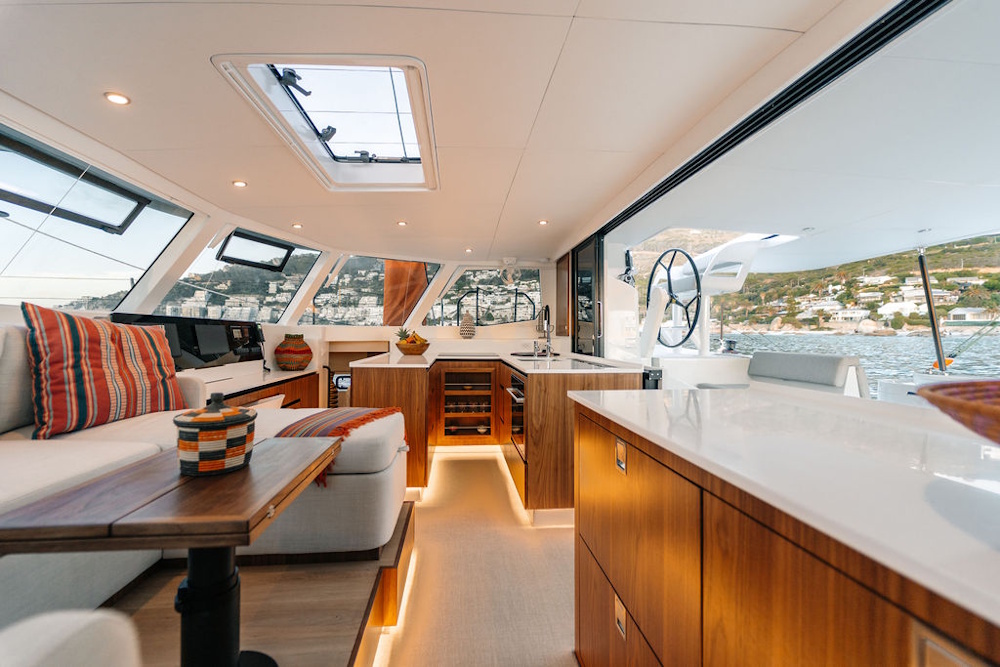
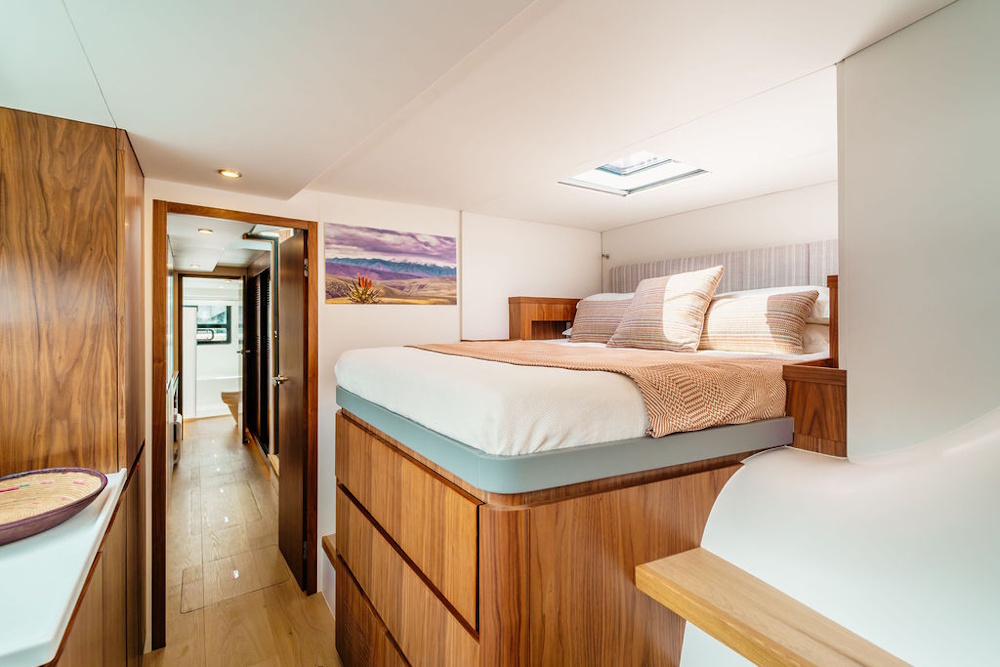
Balance interiors are a key factor that makes these yachts stand out from the competition: performance boats you can live aboard with comfortable cabins, proper handholds, storage where it matters, and joinery that looks and feels like luxury. The brand leans hard on craftsmanship and owner customisation as a point of difference.
464, 502, 540, plus the 580 and 750
Balance 464: the “smaller” yacht with VersaDrive available and a clear focus on sailing more and motoring less.
Balance 502: #1 hull Tiger Lily launched at the Miami International Boat Show (Feb 11–15, 2026). She is the next benchmark.
Balance 540: positioned as the successor to the 526, with Balance claiming a meaningful jump in volume (25% more internal space) without sacrificing the performance.
Balance 580: a carbon-reinforced, epoxy performance cruiser that keeps the brand’s offshore priorities front and centre.
Balance 750: the flagship, a 23.2m high-performance luxury cat with forward cockpit and dual bulkhead helms, showing how far the design can scale.
Pros and Cons of the new hybrid direction
Pros
- Quieter, cleaner, with reduced generator dependence.
- Hybrid is optional, so purists can stay conventional.
- Engineering is integrated into the platform (not retrofitted), improving weight distribution and system coherence.
Cons
- Complexity: more components, more integration, more specialist servicing (especially away from major hubs).
- Cost and payload: hybrid systems and batteries can add expense and weight if not specified carefully (owners must be honest about how they’ll actually use it).
- Resell: “hybrid” is still in its early days, this is an area that is changing fast.
Summary
The main way of reducing your carbon footprint on a yacht is still to design yachts that sail early in light conditions and manufacture boats that last for 20 to 30 years and more. That remains Balance’s key focus, but they now have the option to top that up with hybrid power options which have other advantages such as quieter motoring and more power for your house loads.
This marks another step in Balance’s successful evolution in the performance sailing catamaran market.
| Length overall | – |
|---|---|
| Beam | – |
| Draft | – |
| Displacement | – |
| Mast height (above WL) | – |
| Sail area (upwind) | – |
| Sail area (downwind) | – |
| Engines (standard) | – |
| Hybrid option | – |
| Fuel capacity | – |
| Water capacity | – |
| Berths | – |
Note: Fill in the exact figures you want to publish in the data object in the script below.